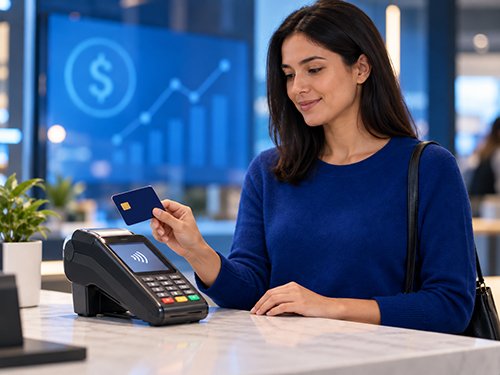
In today’s digital world, paying with a credit or debit card has become second nature. Whether you’re grabbing coffee, shopping online, or booking a service, there’s usually a card swipe, tap, or click involved. But behind that quick transaction is a system most people don’t see—a network working quickly to authorize payments and move money between customers and businesses. At the center of that system is the credit card processor.
If you run a business, understanding how credit card processing works can help you make better decisions about how you accept payments, what equipment you use, and what processing costs you may encounter.
Let’s break it down in plain terms.
What Exactly Is a Credit Card Processor?
A credit card processor, sometimes called a payment processor, helps handle electronic transactions between your customer’s credit or debit card and the financial institutions involved in processing the payment.
Think of the processor as one part of the system that helps information move securely between the business, card network, issuing bank, and acquiring side of the transaction.
A typical card transaction may involve:
- The customer using the card
- The merchant accepting the payment
- The issuing bank that issued the customer’s card
- The acquiring bank or merchant-account provider associated with the business
- The card network, such as Visa or Mastercard
- The payment processor helping transmit transaction information
These different parts of the payment system work together to determine whether a transaction is approved and to eventually move funds to the merchant.
How the Credit Card Processing Flow Works
Here’s a simplified look at what typically happens when a customer pays with a card:
- Authorization
The customer presents a card by chip, tap, swipe, keyed entry, or online checkout. Transaction information is sent through the payment system to the card network and issuing bank for authorization.
- Approval or Decline
The issuing bank evaluates the transaction and sends back an approval or decline response. This normally happens within seconds.
- Settlement
Approved transactions are later submitted for settlement so funds can move through the banking system.
- Funding
After settlement, the merchant receives the funds according to the processor or merchant-account provider’s funding schedule, minus applicable processing fees and other charges.
What’s a Merchant Account, and Do You Need One?
A merchant account is a type of account used as part of the card-payment process. However, businesses do not always open a traditional dedicated merchant account directly.
Some payment platforms, such as Square and Stripe, operate using a payment-facilitator model that allows many businesses to begin accepting payments without establishing a traditional individual merchant account through a separate provider.
Other payment-processing arrangements involve individual merchant underwriting and a dedicated merchant-account relationship.
Which approach makes sense depends on factors such as your business type, processing volume, payment methods, transaction size, risk category, and pricing preferences.
Common Types of Credit Card Processors
Payment-processing services can be structured in several different ways. Understanding the basic differences can make processor comparisons easier.
Payment Facilitators
Examples include Square, PayPal, and Stripe.
Payment facilitators are designed to make it relatively easy for businesses to begin accepting payments without going through the same onboarding process required for some traditional merchant accounts.
Potential advantages:
- Relatively quick setup
- Simple pricing structures
- Integrated payment tools
- Convenient options for small businesses and startups
Potential disadvantages:
- Flat-rate pricing may become less attractive at higher processing volumes
- Less ability to customize some account terms
- Accounts remain subject to the provider’s risk and acceptable-use policies
Traditional Merchant Account Providers
Traditional merchant-account arrangements generally involve more individualized underwriting and may offer different pricing structures, equipment choices, gateway options, and account terms.
Potential advantages:
- More individualized underwriting
- Different pricing structures may be available
- Potentially greater flexibility for established businesses
- Options designed for specific industries or processing requirements
Potential disadvantages:
- Application and underwriting may take longer
- Monthly fees or other account charges may apply
- Contracts and cancellation terms vary by provider
High-Risk Payment Processors
Businesses in certain categories—such as CBD, supplements, credit repair, travel, subscription services, or businesses with elevated chargeback risk—may have difficulty obtaining approval from some mainstream processors.
Specialized high-risk processors and merchant-account providers work with businesses that require additional underwriting. Pricing, reserve requirements, contracts, approval standards, and supported industries can vary considerably.
Why Choosing the Right Processor Matters
Payment-processing costs can include more than just a transaction percentage. Depending on the provider and account structure, a business may encounter:
- Transaction fees
- Monthly account fees
- Chargeback fees
- PCI-related fees
- Payment gateway fees
- Equipment costs
- Terminal rental or lease charges
- Early termination fees
That’s why it is important to compare more than the advertised transaction rate. Your total processing cost can depend on how your customers pay, your monthly sales volume, average transaction size, equipment requirements, and the processor’s pricing structure.
The processor also needs to fit the way your business actually operates.
For example:
- A local retail business may place more importance on POS equipment, inventory tools, and in-person checkout features.
- An online business may care more about checkout integrations, recurring billing, payment links, and developer tools.
- A higher-volume business may place greater importance on pricing structure and overall processing cost.
- A higher-risk business may need a processor with underwriting experience in its specific industry.
What About Equipment?
If you’re accepting payments in person, you’ll usually need some type of POS system, card reader, or payment terminal.
Some processors offer their own hardware, while others support compatible third-party equipment. Equipment choices can range from simple mobile readers to countertop terminals and complete point-of-sale systems.
Depending on your business, you may want equipment that supports:
- EMV chip payments
- NFC and contactless payments
- Apple Pay and other digital wallets
- PIN debit
- Printed or digital receipts
- Wi-Fi, Ethernet, or cellular connectivity
- Inventory or POS software integration
Before buying equipment, confirm that the terminal or reader is compatible with the processor and payment platform you intend to use.
Security and Compliance
Businesses that accept card payments have responsibilities related to protecting payment information and following applicable payment-card security requirements.
PCI DSS establishes security standards intended to help protect cardholder data.
Payment processors and platforms may help businesses meet these requirements through features such as:
- Transaction encryption
- Tokenization
- Secure checkout tools
- Secure POS hardware
- PCI compliance assistance
The exact responsibilities of the merchant depend on how payments are accepted and how cardholder information is handled.
A Simple Example
Imagine you operate a boutique that sells both in-store and online. You need a countertop checkout option, inventory management, an online store, and a way to accept payments at occasional events.
An all-in-one platform such as Square could be worth comparing because its payment processing, POS tools, online capabilities, and hardware operate within the same ecosystem.
Another merchant may have different priorities. A business processing significantly more volume might focus more heavily on pricing structure, interchange costs, equipment flexibility, or merchant-account terms.
That’s why there is no single processor that is automatically the right choice for every business.
Don’t Just Set It and Forget It
Choosing a credit card processor is not simply a matter of finding a company that can accept Visa and Mastercard. Processing costs, equipment, funding schedules, payment methods, contract terms, business eligibility, and customer support can all affect whether a processor is a good fit.
It is also worth reviewing your processing setup periodically. As your business grows or changes, the processor that made sense when you started may no longer be the best match for your current needs.
At PremierProcessors.com, we provide educational information and comparison tools designed to help business owners understand their payment-processing options and narrow down processors that may fit their business.
Ready to Find Processor Matches?
Instead of sorting through dozens of payment companies on your own, use our processor-matching tool to narrow your options based on how your business accepts payments, your processing volume, industry, and other important factors.

We help businesses compare payment processors with clarity and confidence so they can make a more informed choice.